
Tax Loss Harvesting: What the Rules Leave to You
September 29, 2026
Tax loss harvesting is selling a position in a taxable account at a loss so the realized loss offsets realized gains, then up to $3,000 of ordinary income, with the rest carried forward. The rules that price the loss and set the window for booking it are on IRS pages, and each one is linked below.
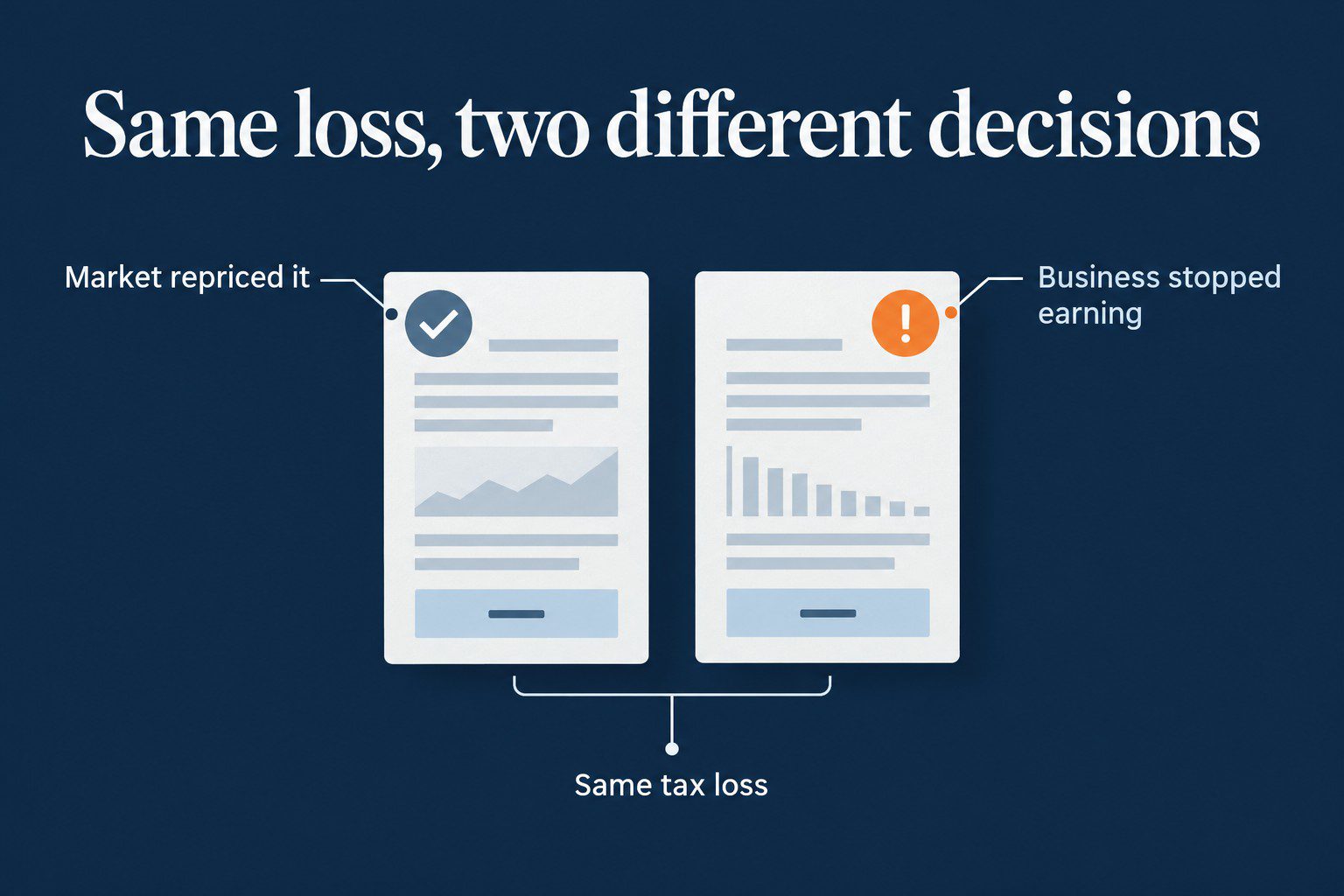
The law prices the loss. It doesn’t tell you if the business still earns its place in the portfolio. Two holdings can show the same loss, one because the market repriced it and one because the business stopped earning its cost of capital. The tax treatment is identical either way.
Key points
- Net losses offset gains first, then up to $3,000 of ordinary income, with the rest carried forward.
- The IRS has never ruled on two funds tracking one index, so that common swap rests on custom.
- A harvest defers the tax bill, and Chaudhuri, Burnham, and Lo measured 0.82% a year.
- Judge the business first, since Carvana and FTI Consulting show one paper loss meaning opposite things.
- Test the replacement the same way, setting its cash flows against its obligations.
What Are the Tax Loss Harvesting Rules for 2026?
Schedule D nets losses against gains first, short-term against short-term and long-term against long-term, then combines the two into one net gain or loss. If the net is a loss, up to $3,000 of it reduces ordinary income, or $1,500 for a married person filing separately, under IRS Topic 409. Whatever is left carries forward to later years until it’s used up, and it keeps its long-term or short-term character. The question for the book is which clients have gains to net this year and which are carrying losses forward.
A holding is long-term after more than one year, counted from the day after the client bought it. The question that raises is which lots pass the one-year mark before the sale date.
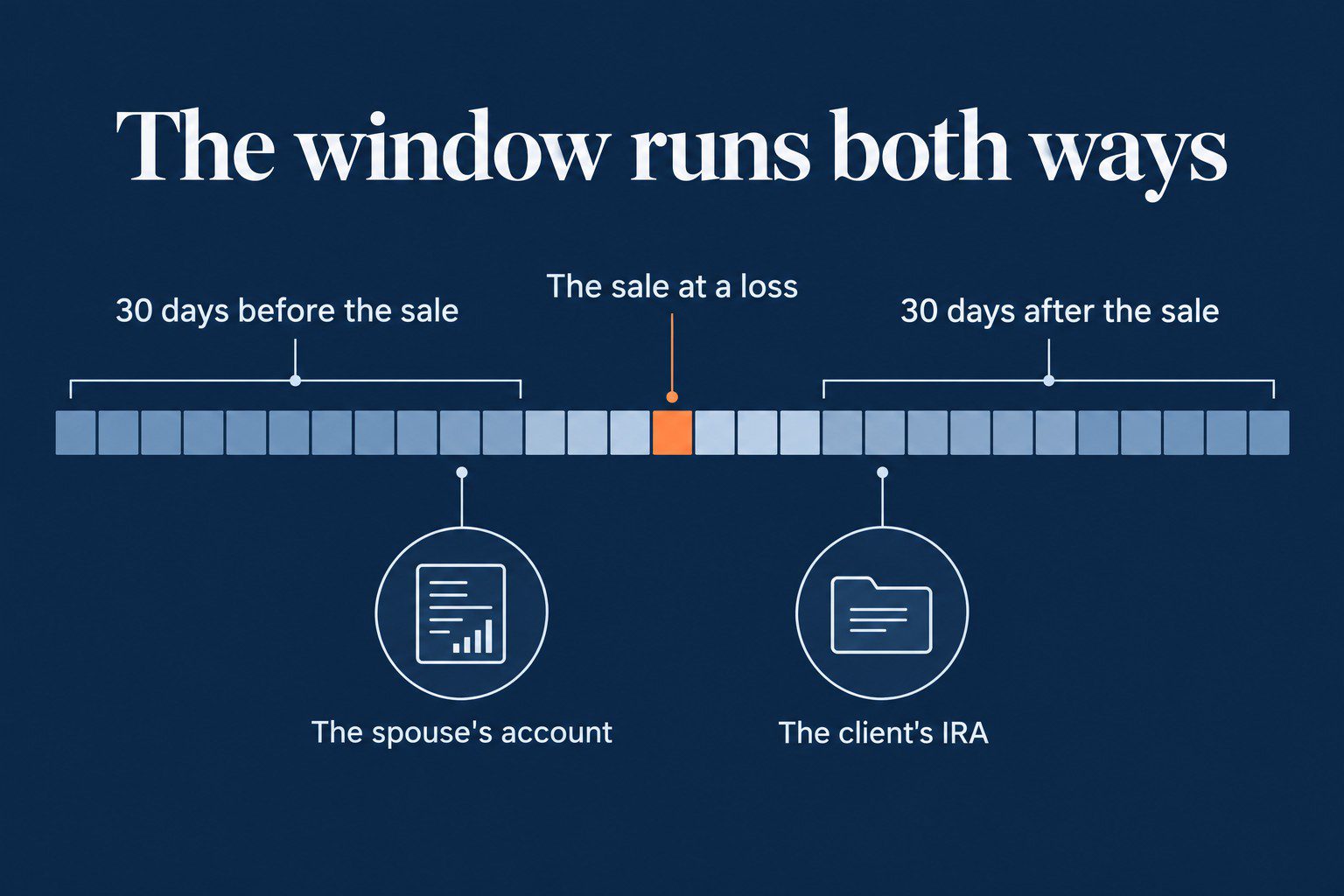
The wash sale rule in Publication 550 disallows a loss if, within 30 days before or after the sale, the client does any of four things:
- buys substantially identical stock or securities,
- acquires them in a fully taxable trade,
- acquires a contract or option to buy them, or
- has an IRA or Roth IRA buy them.
A spouse’s purchase counts too. Outside an IRA, the disallowed loss goes onto the basis of the new shares, and the holding period carries over. The loss waits for the next sale instead of disappearing. Inside an IRA it’s gone, because Rev. Rul. 2008-5 holds the loss disallowed and the IRA’s basis unchanged. The question is which of a household’s accounts can trigger the window, and the IRAs and the spouse’s account count.
The 2026 long-term rates come from Rev. Proc. 2025-32. The 0% rate runs up to $98,900 of taxable income on a joint return and $49,450 for a single filer, the 15% rate runs up to $613,700 joint and $545,500 single, and 20% applies above that. Short-term gains are ordinary income, and the top ordinary rate for 2026 is 37%. The 3.8% net investment income tax under Topic 559 applies above $250,000 joint and $200,000 single. The question is which clients are in the 0% bracket this year.
What Counts as Substantially Identical?
Publication 550 gives the whole standard in two sentences. “In determining whether stock or securities are substantially identical, you must consider all the facts and circumstances in your particular case.” And then: “Ordinarily, stocks or securities of one corporation are not considered substantially identical to stocks or securities of another corporation.”
The myth every advisor has heard is that swapping one index fund for another that tracks the same index is settled practice. It isn’t settled. Publication 550 doesn’t mention funds, and the IRS has never ruled on two funds that track one index. Even BlackRock’s advisor page calls the term undefined and sends advisors to a tax professional. The myth comes from the custodians’ pages, where the suggested replacement is always a fund that tracks the same index. The question is which of your standard replacements rest on IRS text and which rest on custom.
What Is a Harvest Worth?
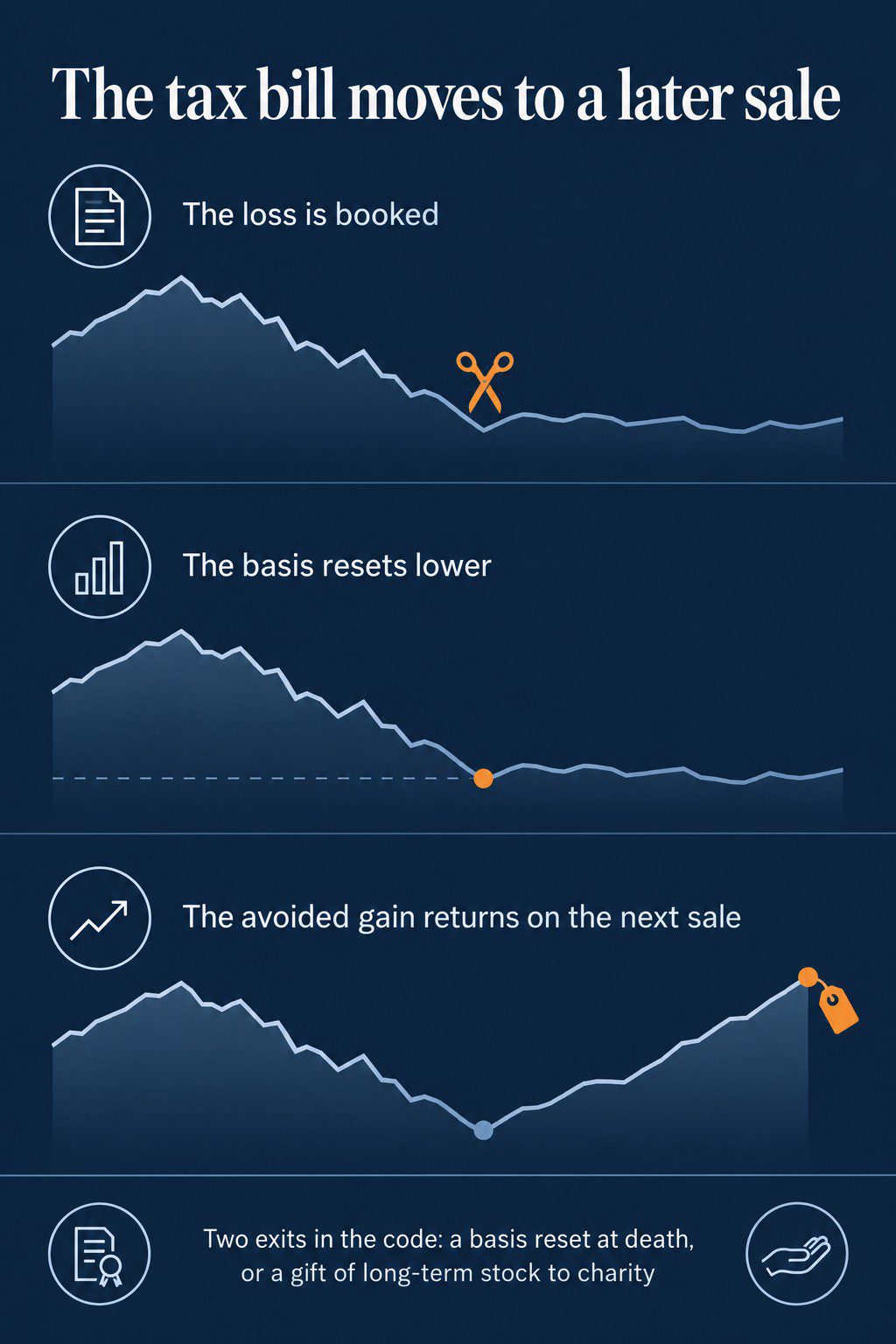
A harvest moves a tax bill rather than removing it. The replacement’s basis is what the client paid for it after the decline, so the gain that was avoided stays inside the new position and comes back on its next sale. The law provides two exits. Property inherited from a decedent generally takes a basis of fair market value at death, and long-term stock given to a public charity is generally deductible at fair market value, within a 30% of adjusted gross income limit. Both are rules, and each one asks if the client’s plan runs through it.
The one peer-reviewed measurement of the strategy is Chaudhuri, Burnham, and Lo in the Financial Analysts Journal in 2020. On the 500 largest stocks from 1926 to 2018, at assumed rates of 15% long-term and 35% short-term, a simulated harvesting strategy produced 1.08% a year of what the paper calls tax alpha before costs, and 0.82% under the wash sale rule. The reading ran from 2.13% a year in 1926 to 1949 down to 0.51% in 1949 to 1972. It was largest in volatile, dispersed, low-return markets, and it matched a passive benchmark in calm expansions. It’s a real number, measured on a simulated strategy and historical data. No client earns it.
Should the Position Leave at All?
The consensus method has two steps. The biggest paper loss gets harvested first, and the replacement is whatever tracks the same index. Neither step is a judgment about a business. A list sorted by paper loss selects for the companies the market has already marked down, the same way a screen sorted by P/E selects for value traps.
A paper loss is a price event. The company’s earning power is a separate question, and the statements answer it. Uniform Accounting adjusts the reported statements with over 130 adjustments so you can compare every company on one basis. Uniform return on assets (ROA) is the return a company earns on its assets after those adjustments. Then set Uniform cash flows against the company’s hard obligations. Those are its debt maturities, its interest, and the maintenance capital spending it needs to keep operating, in that order. That’s reading the statements the way a forensic accountant does, the method Litman and Spivey lay out in The MISinterpretation of Financial Statements.
Two dated cases from FA Alpha’s own research house show both outcomes. In FA Alpha Daily on Dec. 21, 2022, Carvana’s stock had fallen about 98% from its August 2021 high. In 2021, the year its demand soared, the company earned a Uniform ROA of negative 2%. It carried $4 billion of unsecured debt, and its projected gross cash earnings were negative for the next five years. There the loss and the business judgment point the same way. The harvest is the tax-efficient form of a decision the statements had already made.
In Altimetry Daily Authority on March 26, 2025, FTI Consulting’s shares had fallen 14% between Feb. 19 and 20 after a former executive recruited staff and clients away, while the company had earned at least 25% Uniform ROA in each of the previous five years. There the price moved and the published business numbers did not. A harvest in that case trades a strong business for a similar one for 31 days to book a deferral.
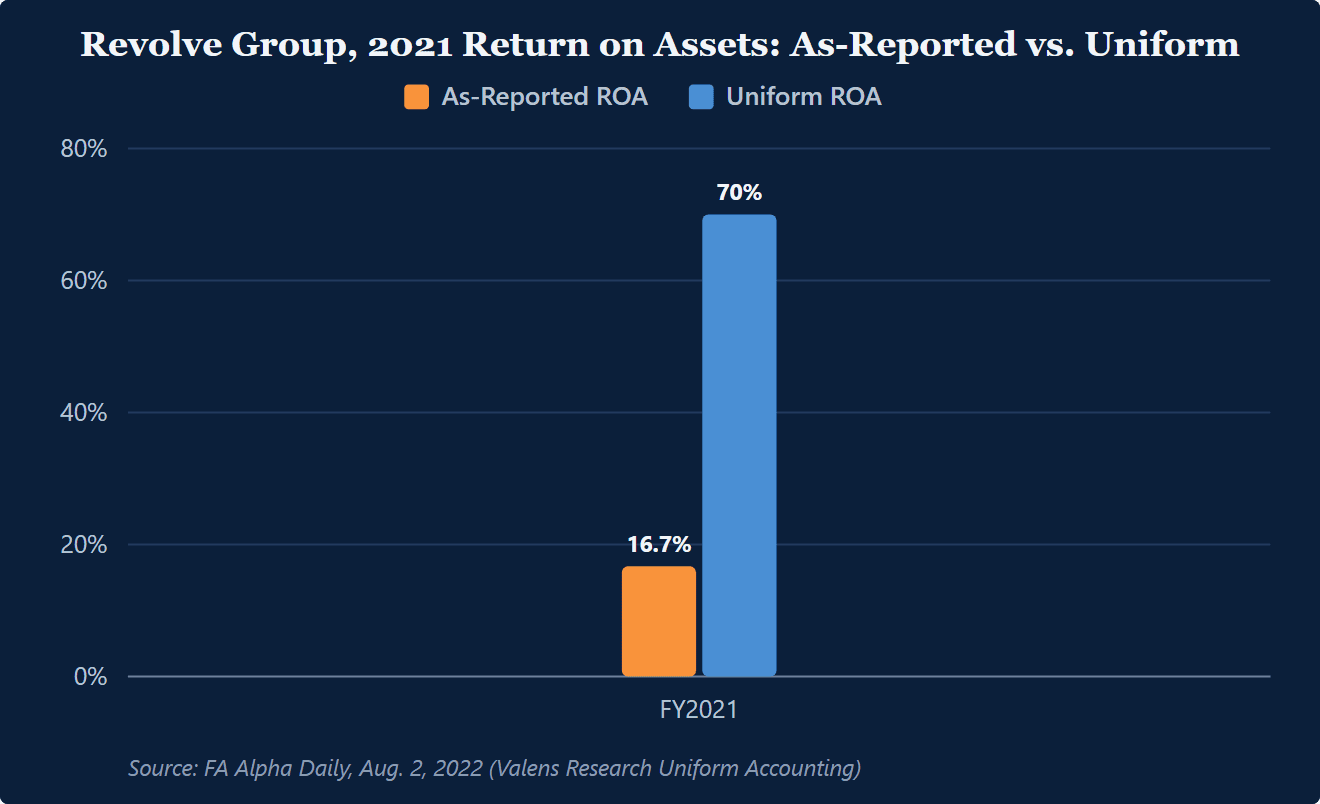
As-reported earnings don’t settle the question either. In FA Alpha Daily on Aug. 2, 2022, Revolve’s as-reported ROA for 2021 was 16.7% and its Uniform ROA was 70%. Both figures come from the same filings, and the difference is in how you read the income statement and the balance sheet.
What Should Replace the Position?
The replacement is a business too, and it gets the same test. If the business that left was weak, the replacement doesn’t need to resemble it at all. If it was strong, the wash sale window is the cost of the deferral, and you’re choosing what the client owns for 31 days and possibly for good. Either way, set the replacement’s cash flows against its obligations before asking how closely it tracks the old position. Automated harvesters and direct-indexing sleeves harvest on price by design.
How Do You Run Both Layers Across a Book?
The rule layer goes on the calendar, meaning the window, the netting, the carryover, and the bracket. You choose the harvest holding by holding, obligations first and size of the loss last. Doing that across every taxable account every December is a data job, and it’s what a research platform built for advisors is for.
Key takeaways
- Losses net against gains first, then offset up to $3,000 of ordinary income, and the rest carries forward with its long-term or short-term character.
- The wash sale window runs 30 days on either side of the sale and reaches a spouse’s purchases and the client’s IRAs, where a disallowed loss is gone for good.
- A harvest defers the tax rather than removing it, because the avoided gain stays in the replacement’s lower basis.
- Decide if the position should leave by setting Uniform cash flows against its obligations before sizing the loss, and test the replacement the same way.
Frequently Asked Questions
Does the Wash Sale Rule Apply if a Client’s IRA Buys the Stock?
Yes. Publication 550 lists an IRA or Roth IRA buying substantially identical stock within the window as a wash sale, and Rev. Rul. 2008-5 holds that loss disallowed with no increase to the IRA’s basis. It’s gone for good.
Can Harvested Losses Offset Ordinary Income?
Yes, after netting and up to a limit. If capital losses exceed capital gains for the year, the excess reduces ordinary income by up to $3,000, or $1,500 for a married person filing separately, under IRS Topic 409.
Do Unused Capital Losses Expire?
No. A net capital loss above the annual limit carries forward to later years until it’s completely used up, and it keeps its long-term or short-term character.
What Are the 2026 Long-Term Capital Gains Thresholds?
Under Rev. Proc. 2025-32, the 0% rate applies up to $98,900 of taxable income on a joint return and $49,450 for a single filer. The 15% rate applies up to $613,700 joint and $545,500 single, and the 20% rate applies above those amounts.
One company on the numbers, every morning
FA Alpha Daily applies this to one company, metric, or market signal every morning, free for financial advisors.