
Motley Fool Review: Is Stock Advisor Right for an Advisor?
November 11, 2026
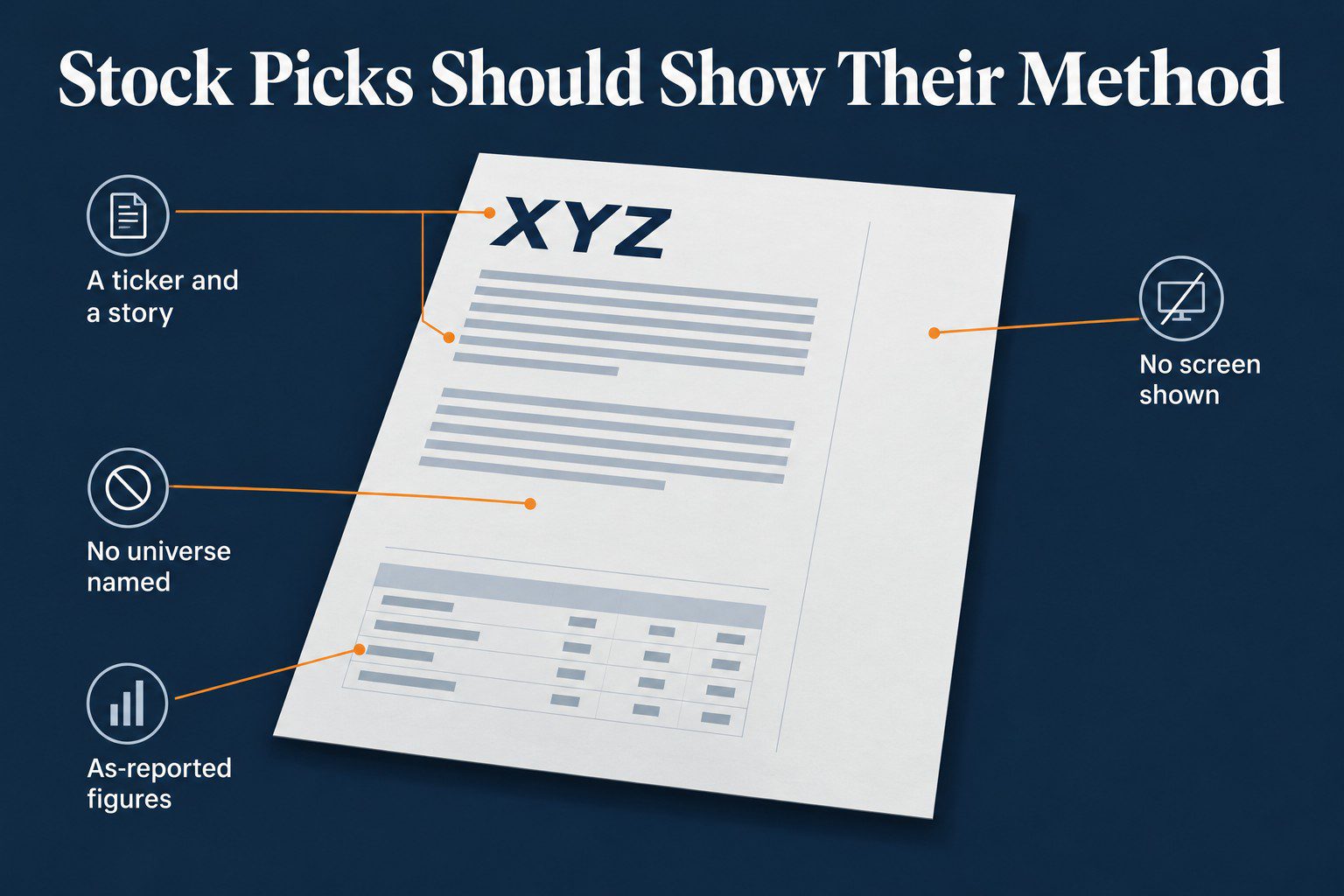
Motley Fool Stock Advisor is a good product for individual investors. However, it doesn’t deliver a selection method you can write down in a client file. If you want a monthly list built for an advisor’s practice, the FA Alpha 50 is the closer fit.
Before you suggest a stock pick to a client, you need a written selection process and financial figures that compare cleanly from one company to the next.
Key points
- Stock Advisor is a good product for individual investors and not research an advisor can file.
- Stock Advisor lists at $199 a year for two recommendations a month, and Epic at $499 for seven.
- The Foolish rules cover holding, not selection, and the site publishes no screen.
- Arm shows an as-reported ROA of 5.8% and a Uniform ROA of 13%, a gap a pick story can miss.
- The FA Alpha 50 screens 50 stocks a month on Uniform figures across more than 25,000 companies.
The Short Verdict for Advisors
Stock Advisor is better for retail readers. It doesn’t deliver equity research an advisor can file and reuse. You aren’t buying a documented selection method or financial figures you can compare across companies and put in a client file.
A documented framework turns an outside idea into a working rationale. That’s the ground we cover in our guide to stock research and valuation frameworks.
Stock Advisor’s published track record doesn’t replace that rationale. When a client file gets reviewed, the reviewer looks for why you made the recommendation, and Motley Fool’s past returns don’t answer that. The FA Alpha 50 is a solid choice, and our comparison of research platforms for advisors shows why.
What Stock Advisor Is and What It Costs
Tom and David Gardner founded The Motley Fool in 1993. Its premium services are “built by and for individual investors,” and the lineup doesn’t list any service for advisors or institutions.
Stock Advisor is a retail stock-picking subscription. It doesn’t come with a research process you can adopt and document.
Here’s what each tier costs at list price and what it includes.
| Service | List Price (Per Year) | What You Get (As Stated) |
|---|---|---|
| Stock Advisor | $199 | 2 stock recommendations each month, plus the “Top 10 Stocks to Buy Now” list, rankings, and scoring tools |
| Epic | $499 | Seven stock recommendations every month from a bundle of Stock Advisor, Rule Breakers, Hidden Gems, Dividend Investor, and the Epic Portfolio |
| Epic Plus | $1,999 | Epic plus Trends, Value Hunters, and Global Partners |
| Fool One | $13,999 | Highest-priced tier listed |
Promotional first-year prices appear on order pages, but the terms limit those promotions to new, first-time members, so the $199 list price is the number to plan around. You can cancel at any time, and the membership auto-renews at the then-current rate. Stock Advisor gives no refunds unless your offer included a membership guarantee, which never runs past 30 days, while Epic comes with a 30-day full refund.
How the Picks Are Chosen
Motley Fool puts most of its discipline in the ownership rules rather than in a selection model. For a long-term retail investor, that’s a reasonable place to put it.
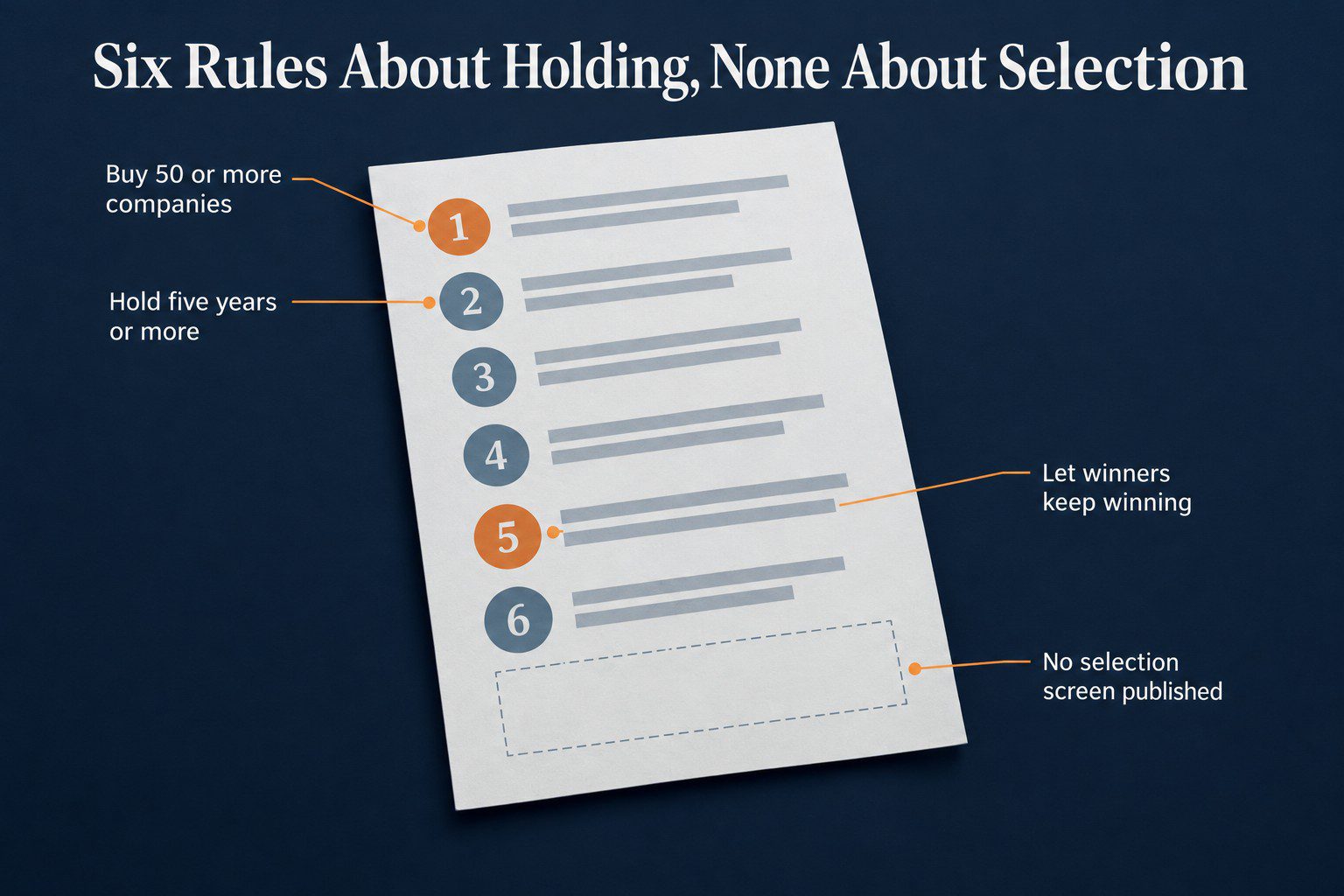
Its investing philosophy asks members to buy 50 or more recommended companies over time and hold them on average five years or more. It also asks them to invest new money regularly, hold through volatility, let winners keep winning, and target long-term returns.
The same page says, “Historically, we recommend winners 60-70% of the time,” and that picks focus on “business fundamentals of the companies.” It stops short of a stated universe or a set of comparable figures that explain why one company made the cut and the next one didn’t. That leaves the advisor writing the method into the file.
Advisors often treat a track record as a stand-in for that method. The Epic sales page leads with headline gains on four example picks with “Recommended on” dates from 2005 to 2016. It doesn’t show an as-of date or a calculation note. That’s a sales page doing its job, but it doesn’t give an advisor any transparency.
Where Stock Advisor Falls Short for Advisors
There are three places where Stock Advisor doesn’t deliver what advisors need. The first one is straightforward. You don’t get a written, repeatable selection method that comes with each pick.
When compliance pulls a sample of files and wants the research behind each recommendation in writing, you end up rebuilding the criteria. A ticker and a narrative can be a useful source of ideas, but they aren’t a repeatable input on their own. You own the recommendation and none of the reasoning.
The second gap is the numbers under the story, because the “business fundamentals” behind each pick come from as-reported financial statements. As-reported accounting can make one company look average and another look exceptional when their economics are closer than they appear.
Arm Holdings (ARM) is one example. Its Uniform return on assets (ROA) is 13 percent against an as-reported ROA of 5.8 percent in the most recent fiscal year, and 13 percent against 6.2 percent in the prior fiscal year (Valens Research data, Nov. 10, 2026). Arm spends heavily on R&D, and as-reported accounting treats much of that spend as a cost of the year.
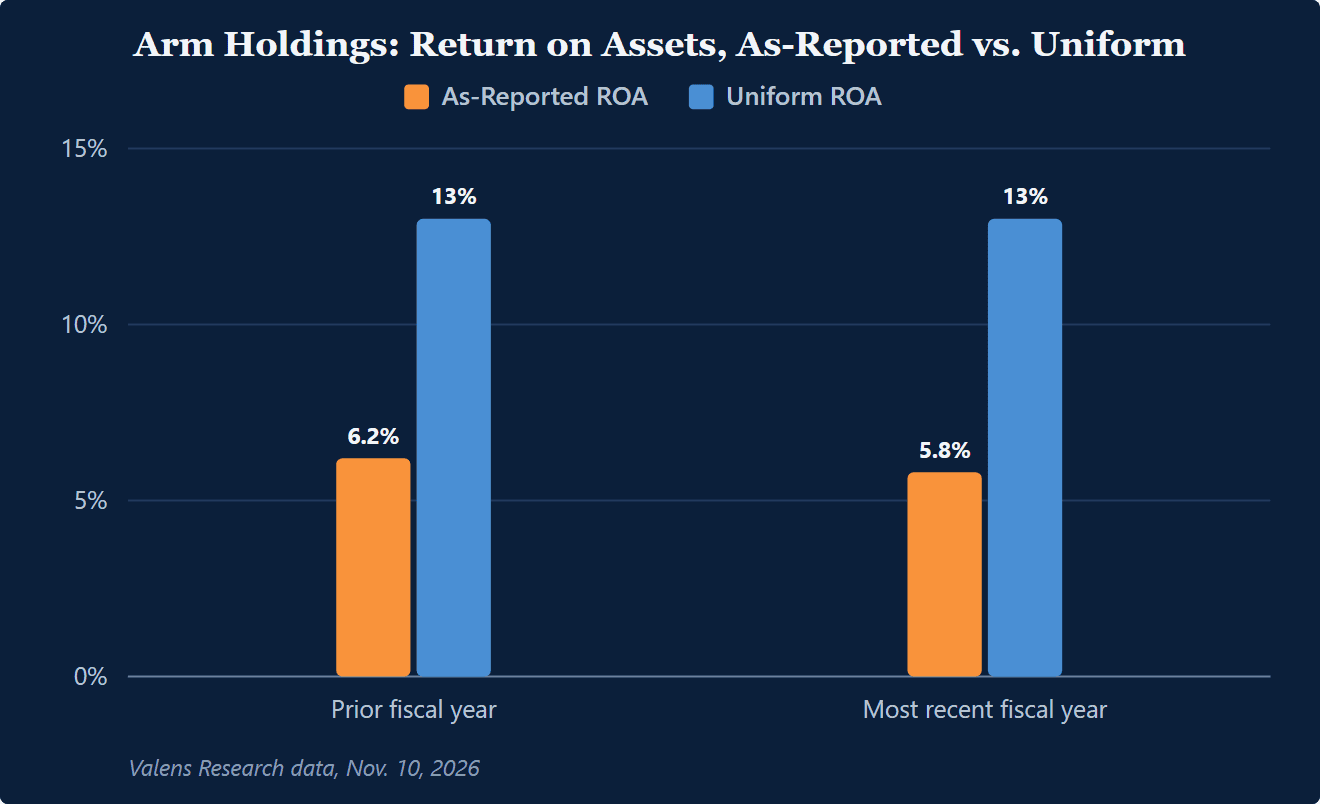
Uniform Accounting treats that R&D as the investment it is, which changes both the asset base and the return. Arm is our example of what as-reported numbers can hide, not a statement about any Motley Fool pick or a view on Arm as an investment. Comparing ROA across names starts with putting every company on the same accounting basis.
The third gap is selection context. Stock Advisor is a retail product with two recommendations a month, and no screen runs across a stated universe. Without that screen, you can’t say clearly why one name made the cut and the next one didn’t.
What an Advisor Needs From a Monthly Stock List
A monthly list saves time when it arrives in a form you can file, with criteria and numbers that line up from one company to the next. That keeps the process consistent across accounts instead of turning it into one-off judgment calls. It doesn’t stand in for your judgment on an account, though it can give that judgment a written place to start.
A monthly stock list earns a place in an advisory practice when three things travel with every ticker. Those are a stated screen, a stated universe, and figures that compare cleanly across companies. If the list can’t tell you what it looked at, where it looked, and how it made the numbers comparable, you’re left writing the rationale yourself.
Valens Research publishes the FA Alpha 50 for financial advisors to fill that hole. Each month it lists 50 stocks screened on quality, growth, and valuation metrics across more than 25,000 companies, plus one highlighted analyst-recommended stock. The figures rest on Uniform Accounting, which applies over 130 adjustments for R&D, operating leases, stock options, excess cash, M&A, and goodwill.
It costs $299 a year with a 30-day money-back guarantee. If you want a two-stocks-a-month narrative for a personal account, Stock Advisor is the better fit, and you’re its reader rather than ours.
Key Takeaways
- Stock Advisor can be a good fit for the individual investor it was built for, and it doesn’t arrive as equity research an advisor can file.
- You don’t get a written selection method, a stated universe, or figures you can compare across client files.
- Because the “fundamentals” come from as-reported statements, a stock story can start from returns that understate the economics, as Arm’s 13 percent Uniform ROA against 5.8 and 6.2 percent as-reported shows (Valens Research data, Nov. 10, 2026).
- A two-picks-a-month cadence without a disclosed screen leaves you owning the recommendation and doing the selection work.
- For a monthly list built for advisors, the FA Alpha 50 rests on a stated screen across more than 25,000 companies using Uniform Accounting figures.
See this month’s FA Alpha 50, screened on Uniform Accounting figures across more than 25,000 companies, with a 30-day money-back guarantee.