
What Tools Help Advisors Sound Credible on Markets?
October 21, 2026
Quick answer
You sound credible on markets when your commentary runs on structure instead of headlines. Four tools do that. A macro framework that weighs credit, earnings, valuations, and sentiment together. Company numbers cleaned of accounting distortion. A deployment plan with stated rules. And a daily brief.
What Tools Help Advisors Sound Credible on Markets? The repeatable ones. Uniform Accounting is Valens’ framework that applies more than 130 adjustments to reported financials so companies can be compared on the same basis. Each tool below has one job, and none of them requires a research department.
One Framework for All the Signals
If your last three market notes each picked a different villain, clients notice. It starts sounding like you’re following the news cycle, even when you’re not.
Run every note through one macro frame instead. The Market Phase Cycle is Valens’ framework for weighing credit, earnings, valuations, and sentiment as one picture of current conditions. With it, a dip stops being a debate and becomes something you can classify, either noise inside the current phase or evidence the phase is changing. Credit comes first in that framework, because balance-sheet stress and coming debt maturities tend to move before backward-looking data does.
One framework also lets you say, in plain terms, what would change your view. You’d call a selloff a phase shift only if corporate credit were genuinely deteriorating, spreads widening and refinancing getting harder, while earnings expectations fell. Nervous sentiment alone doesn’t change the phase. Write down the two or three signals you treat as confirming, starting from which macro signals matter for asset allocation.
Classify volatility this way, and your tone stays steady when markets swing. The client hears the same voice in March that they heard in January, which is most of what credibility sounds like.
Clean Company Numbers
You can’t sound rigorous on valuation if the earnings under your claim are distorted. Commentary about expensive markets or weak earnings is only as good as the figures underneath it.
As-reported GAAP mixes timing choices and one-offs in ways that make similar companies hard to compare. Research spending lands against the year it was spent, and goodwill from old deals stays in the asset base for years. Uniform Accounting strips those distortions out. For any one company, only five to seven of the 130+ adjustments usually matter, and which ones depends on the industry.
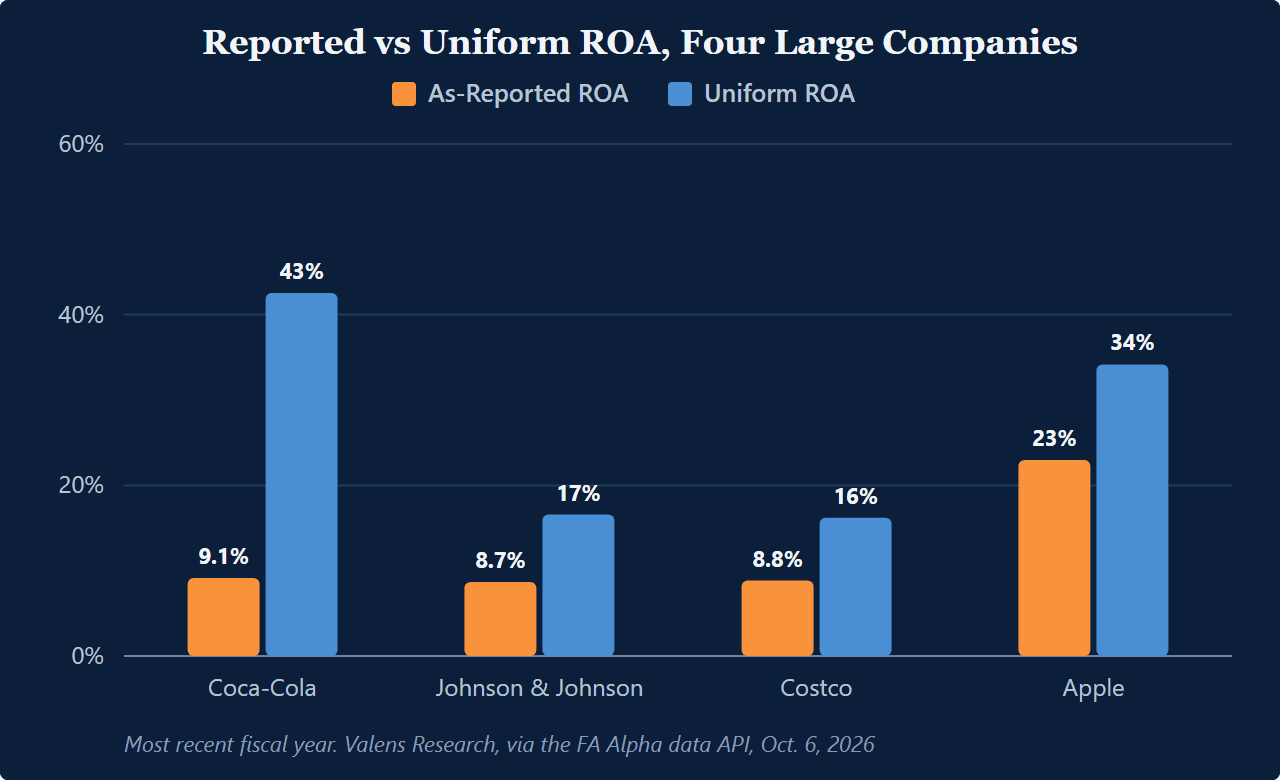
In other words, the same skepticism you’d apply to a headline applies to a reported P/E. Before your next “earnings are weakening” line, it’s worth two minutes on why GAAP earnings can distort profitability and which distortions touch your clients’ holdings.
A Deployment Plan With Stated Rules
When a client asks whether to wait, reassurance isn’t an answer. A defined dollar-cost averaging window is. In the Timetable framework, the window runs 3 to 24 months and adjusts as the macro inputs shift, so the client hears a documented plan instead of a hunch.
That single move changes the shape of the conversation. A panic call about timing becomes a process call about rules, and you can say out loud what would stretch the window or shorten it. If credit stays healthy, the window shortens and cash goes to work sooner. If spreads widen and earnings roll over, it stretches. A client can hear that rule once and remember it.
Cadence does the rest. A daily brief means you’ve seen the day’s story before the client calls, which is the difference between reacting and adding unique macro insight to client conversations. FA Alpha Pulse is the macro brief FA Alpha publishes for exactly those conversations.
Written commentary has a compliance dimension too. The SEC’s Investment Adviser Marketing Rule reaches any materials that touch testimonials, endorsements, or third-party ratings. A documented, repeatable process is also easier to defend in a file review than a stack of one-off takes.
That said, tools like these discipline judgment. They don’t replace it. No framework makes a bad explanation good. A clear explanation built on one gets repeated, and that’s where credibility with clients comes from.
Key points
- Run every market note through one framework that weighs credit, earnings, valuations, and sentiment.
- Call a selloff a phase shift only when corporate credit deteriorates while earnings expectations fall.
- Only five to seven of the 130-plus Uniform adjustments usually matter for any one company.
- Give clients a dollar-cost averaging window of 3 to 24 months that moves with credit conditions.
Something credible to say, every morning
FA Alpha Daily applies this to one company, metric, or market signal every morning, free for financial advisors.