
A familiar brand name isn’t always what makes a product successful. Across supermarkets and retail stores, private label products have built a growing market by offering consumers alternatives to established names. In today’s FA Alpha Daily, we take a closer look at the businesses behind private label products and their potential role in investment portfolios.
FA Alpha Daily:
Return Driven Strategy
Powered by Valens Research
In 2007, 64 judges swirled, sniffed, and tasted their way through hundreds of wine entries.
This was the 2007 California State Fair Commercial Wine Competition, recognized as one of the most prestigious blind tastings in America. Among its most competitive categories was chardonnay, with 350 bottles competing for top awards.
One wine caught lots of attention in the 2007 iteration of the wine-tasting competition. The winner described this winning entry as a “delight to taste.”
What made this competition winner stand out, other than beating 350 other entries, was its price.
Among all the entries, it only cost less than $3. Meanwhile, other wines cost more, with the most expensive ones worth roughly $55.
The name of this label?
The famous (or rather infamous) “Two Buck Chuck,” a chardonnay brand sold at Trader Joe’s for $1.99 a bottle.
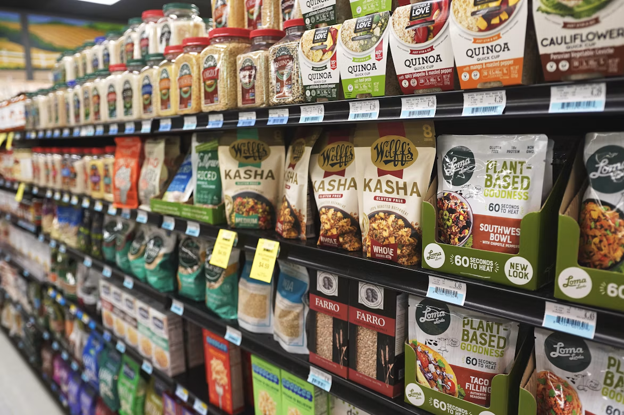
Photo from Unsplash
A “Generic” Wine Label
Marketed formally under the name Charles Shaw Chardonnay, “Two Buck Chuck” is what’s known as a “white label” product, meaning a retailer pays a supplier to create a generic version of a popular product, then the retailer puts its own name on it.
This no-frills approach means customers only have to pay for the product itself. Back in 2007, many shoppers assumed a product isn’t good if it doesn’t carry a recognizable name.
The Two Buck Chuck’s win in a prestigious wine-tasting competition upended that sentiment.
… and today, the private label industry stretches well beyond wines and generates billions in revenue annually.
The Real Winners Stay Behind the Label
Costco’s Kirkland Signature brand is an $86 billion business on its own. Its French vodka routinely beats Grey Goose in blind tastings. Its store-brand batteries are often made by the same factories that supply Duracell.
It’s the same story for many other white labels. None of these cheaper alternatives hit shelves without a trusted supplier behind them.
According to industry research, private label sales in the U.S. has ballooned to $330 billion.
While products with recognizable brand names earn all the accolades headlines, the producers of no-name alternatives rack up billions in sales.
Private label companies produce goods at a large scale. Then, they supply those products to multiple retailers as in-house brands.
These private label firms don’t have to worry about the products that sell and those that do not… and that makes them less exposed to market swings that their customers encounter.
The bottom line?
Companies with strong brand recognition will always have a place in your client’s portfolio.
However, those aren’t the only firms worth putting money into.
Sometimes, the businesses that produce generic labels can be a more stable and less volatile investment for your clients.
Best regards,
Joel Litman & Rob Spivey
Chief Investment Officer &
Director of Research
at Valens Research
Today’s article only scratches the surface of what we share with our FA Alpha Members. If you want to get an in-depth analysis of market trends, uncover undervalued stocks, and more, become an FA Alpha Member today.