|
SPECIAL INVITATION: The 2027 Markets Aren’t What They Say! How do you separate market headlines from the fundamentals driving company value? Join Professor Joel Litman on Thursday, October 29, at 6:00 PM CDT / 7:00 PM EDT for a free webinar exploring the outlook for 2027 and how strategic analysis and valuation can inform investment decisions and client conversations. Professor Litman will also present Dr. Mark L. Frigo’s prepared comments on Strategic Valuation, Return-Driven Strategy, and Strategic Life-Cycle Analysis, followed by a live Q&A with Professor Litman. On October 29, Professor Joel Litman Co-sponsored by FA Alpha, DePaul’s Kellstadt Graduate School of Business, and Driehaus College of Business. Free and online via Zoom. Register here. |
Market panics often punish strong companies alongside weaker ones as investors rush toward safety. For investors and advisors, that creates an opportunity to separate genuine business risk from broader market fear. In today’s FA Alpha Daily, we examine how periods of panic can create opportunities hidden within the collateral damage.
FA Alpha Daily:
Return Driven Strategy
Powered by Valens Research
In 1907, New York’s most powerful bankers were summoned to a private library and found themselves unable to leave.
The man who had called them there was J.P. Morgan, and he had no intention of letting anyone go home until they had agreed on a plan to keep the U.S. financial system from collapsing.
Here’s why that meeting happened in the first place…
A Market Headed Towards Collapse
The crisis began with a failed trade. In October 1907, financier F. Augustus Heinze and his associates tried to short squeeze the stock of United Copper. The plan backfired, and Heinze lost his fortune.
That raised an uncomfortable question: what else was Heinze exposed to?
As it turned out, the answer was plenty.. He and his ally Charles Morse had ties to a network of banks and trust companies, and once that became known, depositors rushed to pull out their money.
Trust companies were especially exposed. They accepted deposits and made loans much like banks did, but they held far smaller cash reserves. That made Knickerbocker Trust, whose president, Charles T. Barney, had links to the Heinze-Morse circle, the next target.
Once those connections surfaced, support disappeared. The National Bank of Commerce stopped clearing Knickerbocker’s checks, and the New York Clearing House declined to step in.
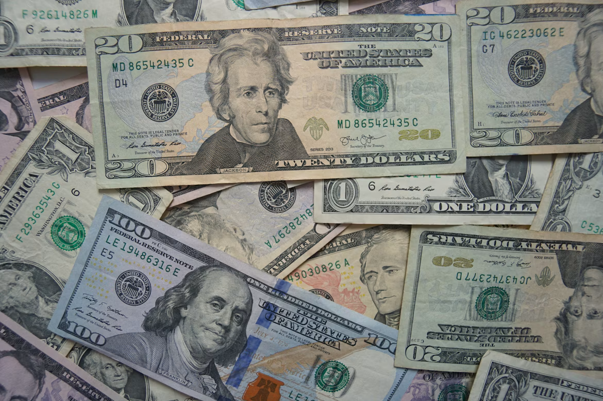
Photo from Unsplash
On October 22, depositors withdrew roughly $8 million in a matter of hours, and the trust closed its doors before the day ended.
From there, the panic took on a life of its own. It no longer mattered what had started it. Fear alone was now driving the market toward collapse.
Now, it’s time to turn our attention towards the meeting that prevented this collapse…
A Market Backstop
At the time, the U.S. had no central bank. If anyone was going to calm the markets, it would have to be private bankers.
Morgan called the trust company presidents to his library on Madison Avenue sometime in November 1907.
His goal was straightforward: Secure enough committed capital to stabilize the system. The doors were closed so no one could slip out on a rumor or a fresh wave of fear.
The negotiations ran deep into the night. Morgan did everything he could to convince the group he was with to agree on a rescue plan which they eventually signed off on.
The market finally had a backstop, and the panic began to ease.
Six years later, in 1913, the U.S. Congress created the Federal Reserve, so the country would never again have to depend on a handful of bankers to step in when the market went sideways.
What Hasn’t Changed
More than a century later, one thing about the market and the economy hasn’t changed:
Investors still look for safe harbor when panic sets in.
When the housing crisis hit in the mid-2000s, plenty of healthy homebuilders were sold off right alongside the ones that deserved it.
When interest rates surged in 2022 and 2023, buyers of loans disappeared, and investors fled loan originators and bank stocks broadly, whether or not the companies were on solid footing.
And earlier this year, fears about AI drove investors out of software stocks indiscriminately, a sell-off some dubbed the “SaaSpocalypse.”
This pattern matters for financial advisors in two ways.
- Not all companies deserve to be punished during a crisis, so it’s worth looking closely at the ones that are being punished unfairly.
- Every crisis is an opportunity for you to calm your clients and separate genuine risk from market-wide panic.
When everyone else is rushing to exit during a crisis, there’s usually an opportunity that’s hiding behind the collateral damage.
Best regards,
Joel Litman & Rob Spivey
Chief Investment Officer &
Director of Research
at Valens Research
Today’s article only scratches the surface of what we share with our FA Alpha Members. If you want to get an in-depth analysis of market trends, uncover undervalued stocks, and more, become an FA Alpha Member today.